Polish that chips in two days is rarely bad polish. It is usually good polish applied over a nail that was not ready: a film of cuticle left on the plate, oil or lotion sitting on the surface, water swollen into the nail from a long soak or shower. Prep is the unglamorous answer, and it is also the encouraging one, because prep is a sequence you can learn, check, and repeat in Granite Quarry or at your own table.
Think of polish adhesion like paint adhesion. Paint peels off a dusty, greasy wall no matter how expensive the can was. Nail lacquer and gel behave the same way on an unprepared plate.
The three quiet chip-makers
First, cuticle residue. The true cuticle is a thin, nearly invisible film of dead tissue that grows onto the plate. Polish laid over it is bonded to loose skin, not nail, and flakes off in sheets as that film lifts. Second, moisture and oil. Nails absorb water and swell slightly; polish applied to a swollen nail shrinks out of fit as it dries, and hand cream or cuticle oil on the plate itself blocks bonding completely. Third, the free edge. Polish that stops short of the tip leaves the most knocked-about part of the nail unsealed, and chips start exactly there, then travel.
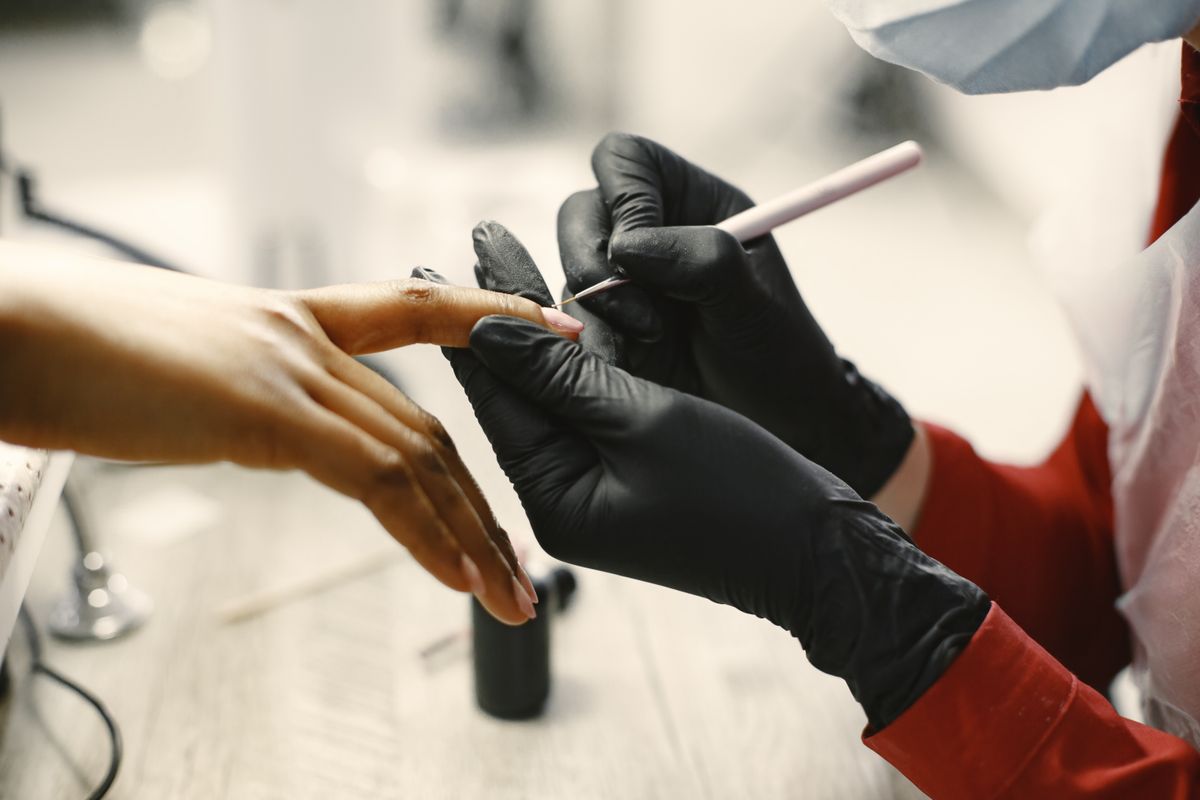
Prep and polish, done in the right order
- Start on dry nails. Do polish work before a shower, not after, and skip long soaks. If nails are waterlogged, wait at least an hour; a quick swipe does not undo a swollen plate.
- Push cuticles back and clear the film. After a brief softening, push the cuticle line back gently and make sure the thin film on the plate is cleared. This step alone fixes the sheet-flaking pattern most home polishers blame on brand.
- Dehydrate the surface. Wipe each nail with alcohol or a nail dehydrator, and do not touch the plates afterward. Skin oil from one fingertip tap is enough to start a chip at that spot.
- Use a base coat, every time. Base coat bonds to nail and gives polish something designed to grip. It also blocks staining from dark colors. Skipping it saves three minutes and costs days of wear.
- Apply thin coats, not one thick one. Two thin color coats cure and dry harder than one heavy coat, which stays soft underneath and dents and chips. Keep each coat thin enough to look slightly imperfect; the second fixes coverage.
- Seal the free edge. Run the brush along the very tip of the nail with color and again with topcoat, wrapping the edge. This cap is the single best defense against the tip chips that start most failures.
- Topcoat, and refresh it midweek. A fresh thin topcoat every two to three days rebuilds the sealed edge as it wears and restores gloss. It is a five-minute habit that commonly doubles a regular polish manicure's life.
- Keep oil on skin, off fresh polish. Cuticle oil is essential daily care, but apply it around the nail after polish is fully hard, and keep nails out of dishwater without gloves for the first day.
Where home care ends and the salon helps
If you follow that sequence and polish still lifts in sheets, the cause may be your nail surface itself: peeling, oily, or very flexible plates are hard for regular lacquer. That is the point where gel polish, cured hard and bonded differently, or a structured overlay earns its place, and a technician at Bella Salon & Spa can tell by looking at how your last set failed. Bring that information: where chips started, how many days in, and what your hands were doing. Failure patterns are diagnostic, and prep adjustments, a rubber base, a different topcoat, a shorter length, follow directly from them.
Small habits that protect a good prep job
Use gloves for dishes and cleaning; hot water and detergent dismantle polish faster than any other daily activity. Open cans and packages with tools, not thumbnails. Type with the pads of your fingers on a keyboard if your length allows. None of this is precious; it is the same respect you would give fresh paint. A well-prepped manicure in a Piedmont summer, with humidity and pool days included, should give regular polish a solid week and gel two to three, and if yours is far short of that, the gap is in the first ten minutes, not the last coat.
Common questions
Why does polish peel off in one whole sheet?
Whole-sheet peeling almost always means it bonded to something loose: cuticle film on the plate, or a layer of oil or lotion. Proper cuticle clearing and a dehydrator wipe before base coat fix that specific failure.
Does expensive polish chip less?
Marginally, through better pigments and brushes, but prep differences swamp brand differences. A careful prep with a mid-range polish outlasts a rushed job with a premium bottle nearly every time.
Should I buff my nails shiny before polishing?
No, the opposite. Polish needs a clean, matte, very lightly textured surface. Buffing to a high shine makes the plate too smooth to grip, and heavy buffing thins the nail as well.
Photos in this guide are representative stock images.
← All guides from Bella Salon & Spa← Back to Bella Salon & Spa